
As the impacts of climate change intensify alongside a deepening global debt crisis, governments and international institutions increasingly promote so-called “innovative finance” solutions as ways to bridge funding gaps for climate action and development in the Global South. Instruments such as ESG bonds, debt swaps, and debt pause clauses are often presented as pragmatic, win-win mechanisms that can mobilise private capital, ease fiscal pressure, and support climate resilience. Yet beneath the appealing rhetoric, many of these proposals risk entrenching the very injustices they claim to address. Rather than providing meaningful relief, they frequently add to already unsustainable debt burdens, divert scarce public resources toward private profit, and delay the structural reforms urgently needed to resolve both the debt and climate crises.
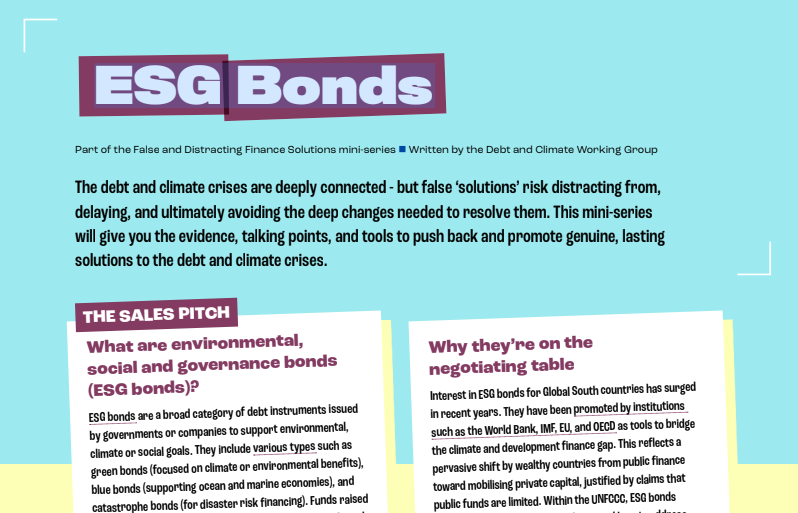
This set of six fact sheets forms part of the False and Distracting Finance Solutions mini-series produced by the Debt and Climate Working Group. Together, they offer a critical examination of prominent financial instruments currently being advanced in international policy spaces, including within UNFCCC and Financing for Development processes. Each fact sheet unpacks the “sales pitch” behind a specific mechanism, interrogates its real-world impacts, and highlights why these approaches fall short of delivering justice, sustainability, or adequate climate finance for countries most affected by climate change.
Crucially, the series situates these financial tools within a broader political and historical context, showing how reliance on debt-based and market-led solutions reinforces power imbalances between the Global North and Global South. The fact sheets argue that false solutions distract attention from wealthy countries’ unfulfilled obligations under international climate agreements and from proven alternatives: large-scale debt cancellation, grant-based public climate finance, and fundamental reform of the global debt architecture. By providing clear analysis, evidence, and talking points, this collection aims to equip policymakers, advocates, and civil society with the tools needed to push back against inadequate fixes and to advance genuine, lasting solutions to the interconnected debt and climate crises.
See the fact-sheets below:
