
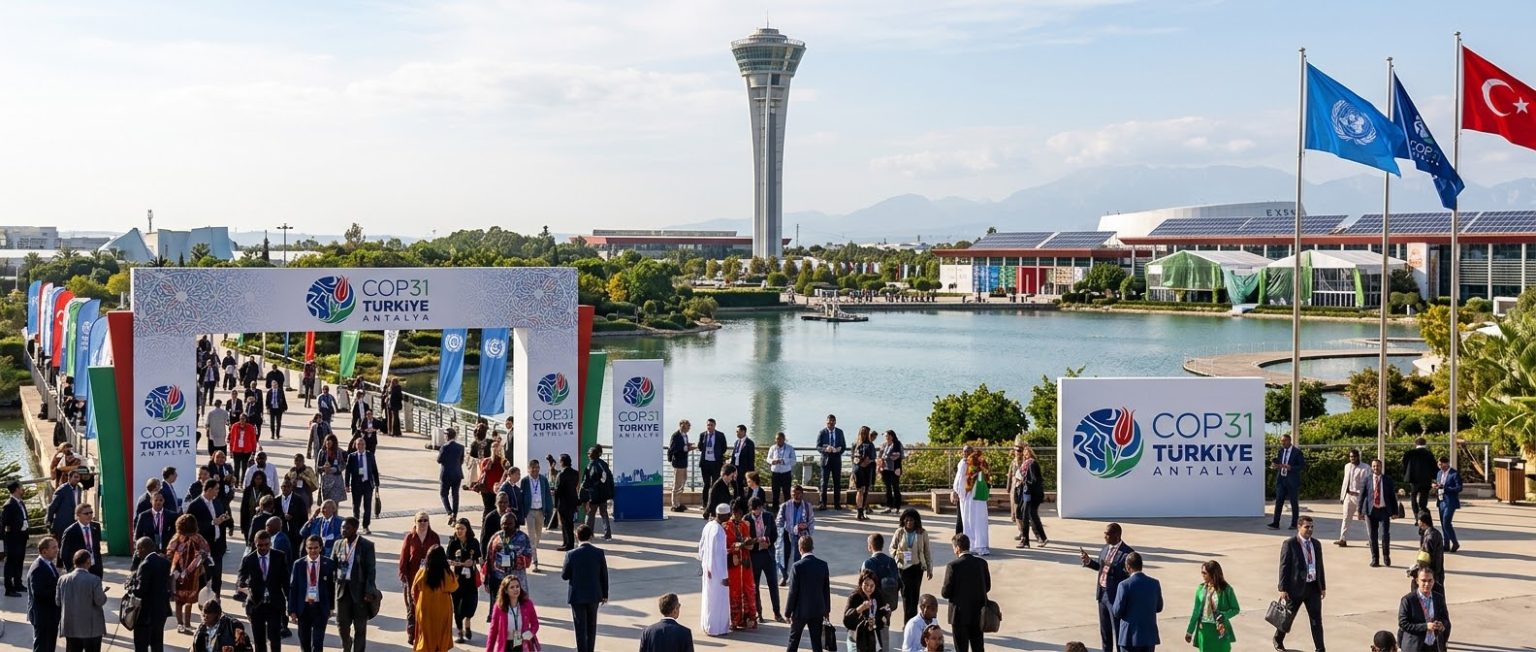
COP is the Conference of the Parties to the United Nations Framework Convention on Climate Change (UNFCCC). “COP” stands for Conference of the Parties. The Conference of the Parties is the supreme decision-making body of the UNFCCC, which was adopted in 1992. COP31 will be hosted by Türkiye in Antalya on 9-20 November 2026.
All States that are Parties to the Convention are represented at COP. At their annual sessions, the Parties review the implementation of the Convention and any related legal instruments, assess global progress and take the decisions necessary to promote an effective and coordinated response to climate change.
COP is the world’s foremost multilateral platform for global climate governance; it is where climate targets are negotiated, commitments are strengthened and collective action is advanced.
COP31 is the 31st Conference of the Parties to the UNFCCC and will be hosted by Türkiye in Antalya from 9 to 20 November 2026. Building on the foundations of previous COPs — in particular COP30 in Belém — COP31 aims to advance dialogue, strengthen consensus and accelerate implementation.
COP31 advances along three main tracks, aiming to turn the commitments made at previous sessions into concrete implementation:
= Emission targets and implementation — Countries delivering on their strengthened Nationally Determined Contributions (NDCs) under the Paris Agreement
= Climate finance — Delivering the new collective quantified finance goal set at COP29 to developing countries
= Adaptation and resilience — Strengthening the resilience of vulnerable countries and communities against climate risks
VIVAT International participates in COP31 as observer and since the inception of the Conference one message stands out clearly: the time for promises is running out, and the time for concrete action is now.
During the opening session, UN Climate Change Executive Secretary Simon Stiell reminded world leaders that climate progress remains insufficient and unequal. He called upon governments to move beyond setting targets and accelerate practical solutions that make a difference in people’s lives.
Climate Justice Must Be at the Centre
Climate change is not simply an environmental problem. It is also a question of human rights, social justice, health, food security, and human dignity. According to the World Health Organization, approximately 3.3 to 3.6 billion people live in areas highly vulnerable to climate change.
In its COP31 Policy and Advocacy Briefing, VIVAT International calls upon world leaders to translate climate commitments into action, emphasizing three major priorities:
1. Just and Equitable Energy Transition: VIVAT calls for an urgent and fair transition away from fossil fuels, an end to new fossil fuel expansion, and greater investment in renewable energy. This transition must protect workers, respect Indigenous Peoples’ rights, and ensure that vulnerable communities are not left behind.
2. Climate Finance and Tax Justice: VIVAT advocates for developed countries to provide adequate, accessible, and grant-based climate finance, including a target of $1.3 trillion annually by 2035. Climate funding should not create additional debt for developing countries. Those who have contributed most to climate change must take greater responsibility.
3. Loss and Damage: VIVAT urges governments to strengthen financial support for communities already suffering from climate disasters. Funding must reach affected communities directly and recognize not only economic losses but also the destruction of ancestral lands, cultural heritage, biodiversity, and livelihoods.
Bringing Grassroots Voices to Global Discussions
For VIVAT International, COP31 is an opportunity to connect the experiences of grassroots communities with international climate negotiations.
Across the world, VIVAT members accompany communities affected by environmental destruction, displacement, poverty, and climate-related disasters. Their experiences remind us that climate policies must be measured not only by international agreements but also by their impact on people’s everyday lives.
Small-scale farmers, Indigenous Peoples, women, children, migrants, and other vulnerable groups must have a meaningful voice in decisions affecting their future.
Guided by the principles of Laudato Si’ and international human rights standards, VIVAT continues to advocate for climate justice, protection of human dignity, and care for our common home.
From Commitments to Transformation
COP31 must become a turning point where global commitments are translated into meaningful action at the local level.
As we begin these two weeks of negotiations in Antalya, our hope is that world leaders will listen not only to scientific evidence and political priorities but also to the voices of those most affected by the climate crisis.
Climate justice cannot wait. The success of COP31 will ultimately be measured not by the promises made in conference halls, but by the positive changes experienced by people and communities around the world.
For VIVAT International, our commitment remains clear: From Faith to Action, From Communities to the United Nations.

