Caring for relationships to make the missionary proclamation authentic and realistic
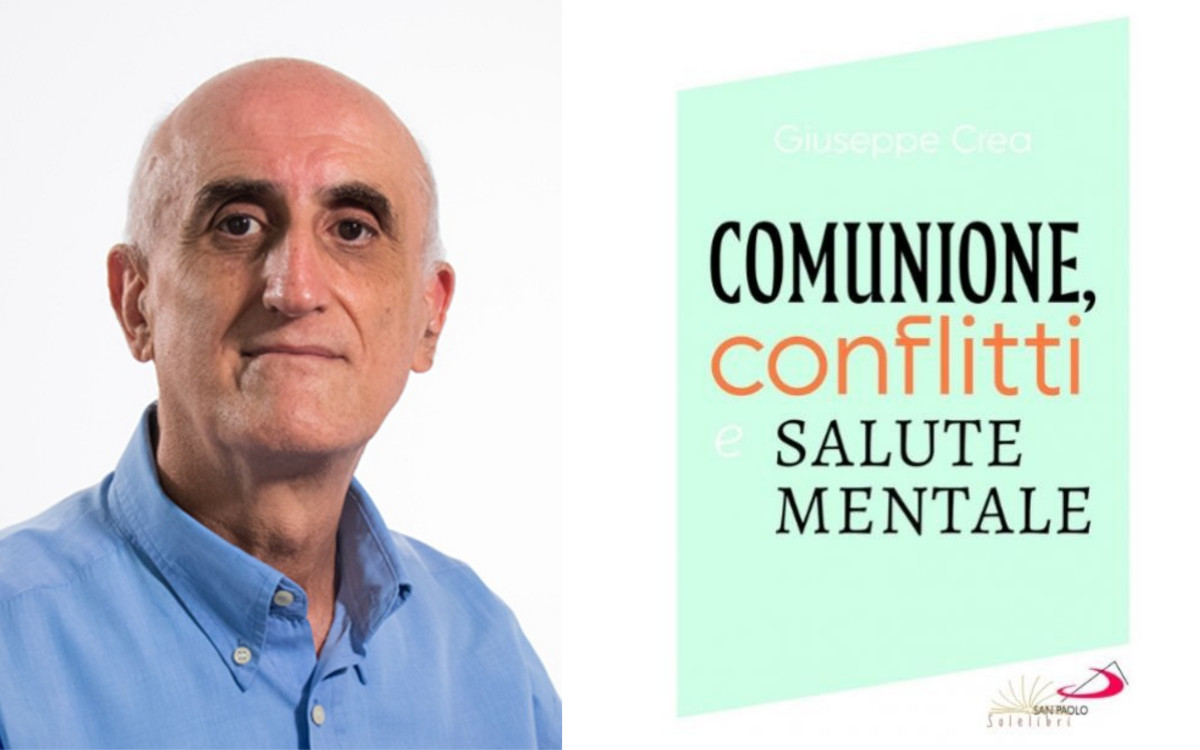
Fr. Giuseppe Crea MCCJ
Community life, in its many ecclesial and pastoral expressions, represents one of the most significant places in which the human desire for communion manifests itself. At the same time, it constitutes a privileged space in which tensions, misunderstandings and conflicts inevitably emerge. These are not anomalies to be avoided at all costs, but experiences that, if properly understood and accompanied, can become precious occasions for personal and communal growth. In this sense, the essay “Comunione, confliltti, salute mentale e missione” (Communion, Conflicts, Mental Health and Mission) presents itself not only as a contribution of theoretical reflection, but above all as an educational itinerary oriented toward the maturation of relationships and the promotion of mental health within communities and groups.
Experiences matured in pastoral contexts, in religious communities, in families, as well as in volunteer groups show with evident clarity how coexistence, though founded on high ideals of altruism and mutual dedication, is not exempt from relational difficulties. Living together inevitably entails the confrontation between different sensibilities, different personal histories and communicative modes that are not always harmonious. It is precisely in this interweaving of relationships that conflicts emerge, often perceived as obstacles to communion, but in reality carrying a strong educational value when they are faced with awareness and responsibility.
In the current context, marked by growing relational complexity and widespread emotional fragility, it becomes increasingly urgent to promote educational paths that help people to live communion in an authentic way. In particular, in the way in which mission is lived as a testimony of peace in the different contexts where conflicts are an armed reality of hatreds, competition, abuses and injustices.
Bearing witness to a harmony according to the teachings of the Gospel becomes a challenge more timely than ever. This is possible if the task of harmonizing communion and tensions becomes part of the proclamation itself.
“Comunione, conflitti, salute mentale e missione” is an instrument to accompany people in recognizing that communion is not built simply by avoiding conflicts, but by learning to live them as necessary stages of a journey of human and spiritual maturation. Even in a family, as in a religious community, or in relationships with people: the proclamation becomes a work of weaving, between the Good News and human frailties, between the newness of the Gospel and the reality of the conflicts in which every missionary finds himself operating. Comboni’s own mandate is an invitation to rediscover communion as a continuous educational process, in which every relationship becomes an occasion for growth, responsibility and mutual care.
The originality of the volume lies in having chosen to read the reality of conflicts not in a purely problematic key, but as a transformative occasion.
When the proclamation of the Kingdom of God takes on this character of change, caring for oneself and one’s own mental health also becomes a priority. “Are you a curator of souls? Cure yourself, lest it happen that, while you take care of others, you neglect yourself,” are the words that recall Saint Ambrose’s warning to his priests. But this invitation is valid for every proclaimer of the Good News: taking care of oneself and one’s own mental health is not considered merely as the absence of discomfort, but as an expression of healthy, mature relationships capable of generating mutual trust. Self-care is an integral part of mission.
As Fr. Giulio Albanese says in the Preface to the book, “even in ecclesial environments and in consecrated life itself, where communion should constitute the beating heart of daily experience, it is not always easy to affirm a logic of sharing, mutual listening and co-responsibility. It is precisely within this tension, between the desire for communion and relational fragility, that the reflection proposed in this volume is situated.”
Educating for a mission that starts from the grassroots of daily relationships – lived with people, with the community, with oneself – means taking care of bonds and tensions, recognizing wounds and vulnerabilities, struggling for justice and educating one’s own tiredness, sustaining mental health and recognizing one’s own needs.
In this way, communion becomes a continuous process. And precisely because it is a process, it is a living part of mission but also a concrete evangelical testimony, where proclamation is a permanent work that pervades the existence of every creature.