by Bro. Alberto Degan MCCJ
The Center for People of African Descent in Guayaquil
In 1980, the Comboni Missionaries founded the Afro Cultural Center in Guayaquil, a city on the Ecuadorian Pacific coast. This Center was the first in all of Latin America dedicated exclusively to the pastoral care of people of African descent, who to this day represent the poorest and most discriminated segment of Ecuador’s population. In fact, rejection, exclusion, and lack of opportunity are the daily experience of many black people living in this city.
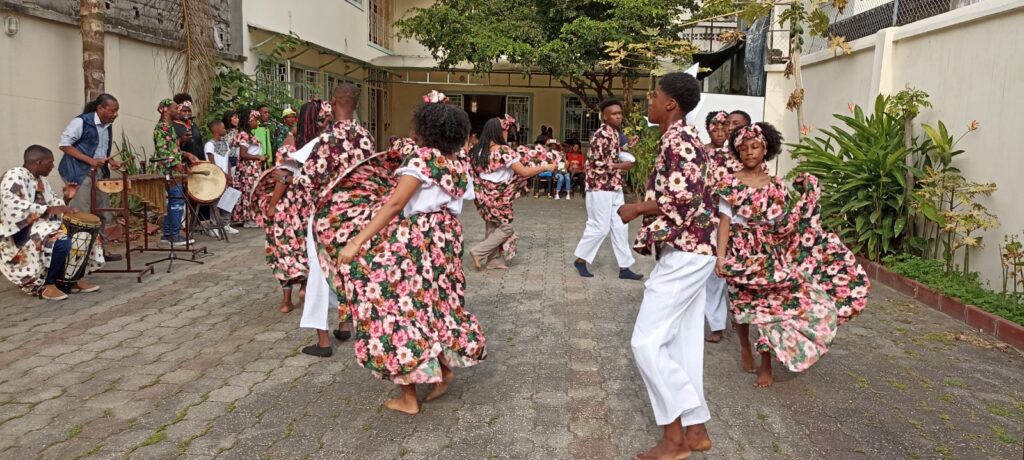
Through our missionary service, we want to push Institutions and also the Church to value the persons of African descent and their culture; at the same time, we want Afro-Ecuadorians to believe in their own beauty and their own talents.
I had the grace to live my missionary vocation in Guayaquil from 2002 to 2010 and from 2020 to 2024. As a Comboni Brother, I feel committed, above all, to human promotion. However, when we speak of Human Promotion, we do not refer only to technical-scientific development, because technical development detached from a spirituality of fraternity and from justice increases – rather than decreases – inhumanity. We see this even today: the horrors of war are multiplied a hundredfold by the development of advanced technologies.
Therefore, we believe that Human Promotion means – first of all – promoting humanity, valuing the human riches of our people, and forming human persons according to God’s plan, who came into the world as the “firstborn among many brothers” (Rom 8:29) to teach us to live fraternity. We thus want to value the human and spiritual beauties of those people whom society marginalizes and disregards: Afro people, inhabitants of urban peripheries, drug addicts, etc.
A Saddening Record
Unfortunately, in recent years Guayaquil has achieved a not-so-enviable record: it has entered the top-ten of the world’s most violent cities, with a homicide rate of 80 per 100,000 inhabitants (almost 60 times the homicide rate in Italy).
In fact, today Ecuador is one of the countries with the highest rate of violence, and this is mainly due to the Mexican drug cartels which, starting in 2017, entered our country, which has become one of the main drug transit points, also thanks to undeniable complicity with high political spheres. And so, now, almost all the neighborhoods of our city are in the hands of gangs linked to the cartels. These gangs impose a payoff (protection money) on all small business owners, even on those who earn just enough to survive. And so many give up the small businesses they had started (for example, selling almuercitos – small lunches), because with the protection money they would have almost no profit.
Sometimes, then, feuds arise within the same gang, causing great matanzas (massacres). Last year, for example, in the peripheral neighborhood of Sociovivienda, 23 people – mostly young – were killed in a single night. Shootings also happen often in other neighborhoods, and so by 7 in the evening people decide to shut themselves in their homes.
Who Deserves a Good Life?
The stranglehold of violence is added to that of social injustice: inequalities continue to grow in Ecuador. In the town of Samborondón, just outside Guayaquil, many rich people have taken refuge: safe in their fortified and protected compounds, they don’t feel particularly threatened by the violence that instead rages in the popular neighborhoods. Those who live here have all the comforts and enjoy all social rights.
For example, public healthcare does not work very well in Ecuador, and so those who can afford it pay for a seguro privado, a health insurance that guarantees them excellent care. Unfortunately, many children in popular neighborhoods do not have a seguro médico, because their parents cannot afford it. Benjamín, for example, a child from the barrio Nigeria, was very ill last year (with parasite problems, gastritis, etc.), but his father – father of six children – didn’t always have the money to take him to the doctor. And so, objectively, Benjamín does not enjoy the same rights as a child living in Samborondón.
But our society has made peace with this injustice. Who deserves a good life? It seems that we have resigned ourselves to the idea that not everyone has the right to it, and that the lives of some children are worth less than those of others.
Living a Good Life in a Violent World
Is it possible to live a good life when living in an unjust society? Is it possible to offer my child a good life in a city dominated by violence? This is a question that stirs in the hearts of many Guayaquil residents. And it is moving to see how many people strive to live a good life even in such a difficult context. I believe that this is precisely the greatness of the human being: in never giving up the search for beauty and goodness, even when everything would seem to push you to give up.
And so here is my answer: yes, even in a violent city like Guayaquil, it is possible to live a good life. On what basis this assertion? In a disarmingly simple way, Jon Sobrino would answer: this is what we see and experience, this is what happens among the poor.
Little Teachers
We know that Jesus was born into a very cruel society, in which massacres were perpetrated and many condemned to death lived the terrible agony of crucifixion. Christ came to teach us to live a good life in a violent world, and in Ecuador he has found many disciples who, in their simplicity, transform themselves into our little teachers.
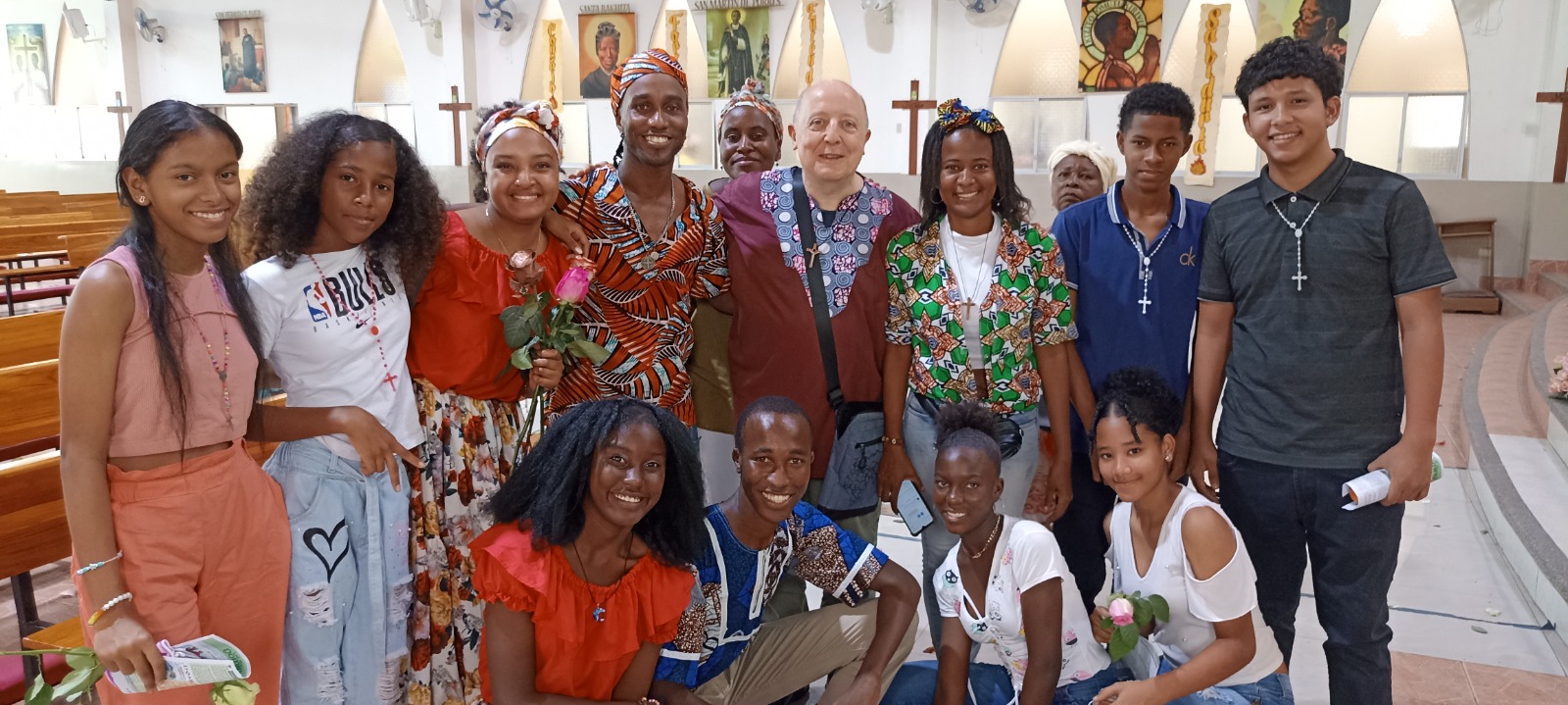
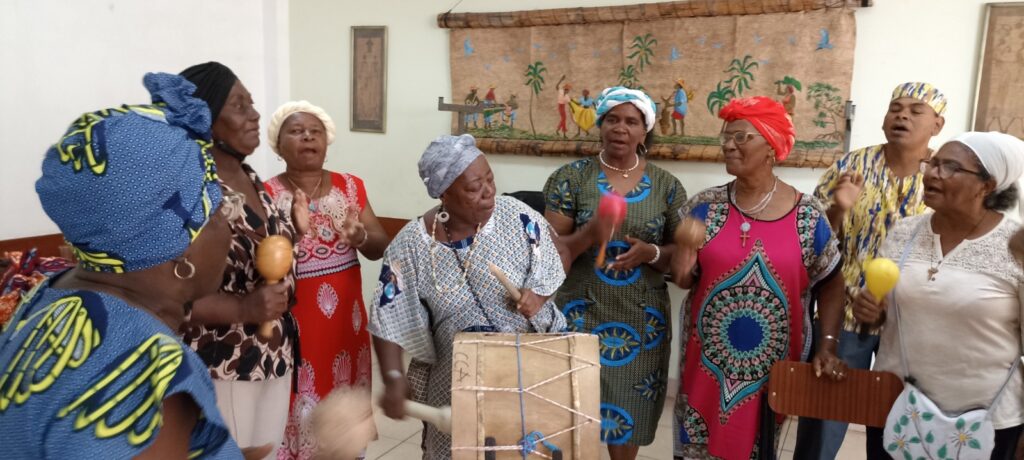
My first teachers are the Afro Missionaries (male and female), Afro laypeople formed in the Comboni spirituality of Save Africa with Africa, who evangelize starting from the culture and spirituality proper to black people. Even though they live in the most violent neighborhoods of the city, Gloria, Estela, Tomasa, Norma, and Carlos continue to organize children’s palenques (community gatherings) in their homes. Let us not forget that the mafiosi linked to drug trafficking try to recruit even children of 6-7 years old. These palenques, therefore, are alternative spaces in which we hope to educate the builders of a different future, giving them a Christian formation, rooted in their Afro spirituality. In other words, we want to save these children from the culture of violence so that, rooted in Jesus, they do not let themselves be tempted by the sirens of easy money linked to drug trafficking delinquency.
Another teacher of mine is Orfilia. It was I, 20 years ago, who introduced her to the peripheral neighborhoods of Guayaquil where the majority of the black population lives. At the beginning, she followed me, a bit timidly. When I returned to Guayaquil, ten years later, she was the one who often accompanied me to peripheral neighborhoods where few dare to enter. Orfilia, who works as an accountant, with the collaboration of some friends has for years now developed a scholarship program for Afro children and adolescents, and dedicates a good part of her time to monitoring the school progress of these children, also organizing after-school spaces for them.
Another teacher of mine is Rodrigo, who invited me to collaborate with a Rehabilitation Center for drug addicts run by an Evangelical church. This collaboration with Evangelicals is beautiful. In fact, one of the things that saddens me most is seeing that to all the problems we are experiencing, we add that of antagonism between different religious denominations, which causes so much division among our people, precisely at a time when there would be a need for greater unity and fraternity. With these young people who are struggling to leave the vice of drugs, we seek the path that leads to a fundamental change in our lives, a change that is impossible to bring about with our own strength alone, but which becomes possible if we place ourselves in God’s hands. Rodrigo, a young father of a family, dedicates much of his time to these young people.
Another teacher of mine is Karen, who lives in Trinipuerto, one of the most violent neighborhoods in the city. She works and takes care of her two children, but despite this – faithful and persevering – she also finds time to meet with the neighborhood children and the young people of the Afro Pastoral: she reads the Word of God with them, and has managed to consolidate a healthy and supportive space in such a problematic context. Karen wants to save these young people from the culture of violence and resignation, giving them the tools to continue walking, fighting, and hoping.
A Great Future for Ecuador
For me, it was a true grace to be part of the life, hopes, and sufferings of this wonderful people. I often look at the photos taken in recent years in Guayaquil, and I say to myself: what beauty in these encounters, in these people! What beauty in this desire to continue fighting and walking with hope in the midst of so many difficulties!
Once some Italian friends asked me: is there hope for Ecuador, which seems suffocated by violence? And I answer: yes, as long as there are people like Rodrigo, Orfilia, Carlos, and Karen, who continue to witness the beauty of the Gospel in such a difficult context, I see a great future for this country.
Feeling Loved
We Comboni Brothers accompany and feel accompanied by these people: faced with such a harsh reality, we lean on one another, and in this fraternity we feel mutual love and consolation. In this way, God gives us the strength to continue walking and hoping.
As Fr Glenday affirms, “If you live the mission as love, you experience transformation. On the one hand, the missionary grows as a visible sign of God’s loving presence. On the other hand, those who are accompanied become more aware of their own dignity as beloved children of God. They feel loved. Thus, the mission becomes mutually life-giving.”
I think this is the most important thing about the mission: that people – especially those who are generally marginalized and discarded – feel loved and valued in their human riches. This is what I experienced in Guayaquil. And for this, I thank God infinitely.